
By The Compass. September 13th, 2026.
Donations to The Compass help support groceries, fresh food, community meals, outreach programs and practical services for people facing food insecurity and homelessness in south Mississauga. Charity Intelligence’s current assessment estimates that 80 cents of every donated dollar is available for programs after fundraising and administrative costs. In 2025, The Compass distributed 954,958 pounds of food, served 84,381 meals and supported 42,222 food bank visits.
Where does your donation actually go after you click Give?
It is an important question.
Donors should be able to understand what an organization does with financial support, why it needs monetary donations when people already donate food, and how you can verify the results for yourself.
At The Compass Food Bank & Outreach Centre, donations support much more than a single bag of groceries.
They help keep food available, purchase products that are running low, provide nutritious options, prepare meals, operate community programs and connect neighbours with practical support beyond food.
Here is a closer look at how that works.
One useful way to evaluate a food bank is to look beyond its own marketing and review independent financial assessments.
Charity Intelligence currently gives The Compass a 5-star rating, an A for financial transparency, and a High rating for demonstrated impact.
Its current assessment states that for every dollar donated, 80 cents are available for programs after fundraising and administrative or management overhead, excluding surplus.
That distinction is important.
It is more accurate to say 80 cents are available for programs than to say 80 cents from your individual donation is literally traced into a grocery bag.
Charities operate through pooled resources. Donations, grants, donated goods and other revenue help support a combined system of programs and operations.
Running a safe, accountable food bank requires infrastructure.
Some necessary expenses include:
These costs do not represent food placed directly into a hamper, but they help make safe and reliable food distribution possible.
The goal is not to eliminate every administrative expense. It is to make sure overhead remains reasonable while the organization delivers meaningful results.
The clearest measure of donor impact is not simply how much money was spent.
It is what the organization delivered with the resources available.
Our 2025 results included:
2025 Impact | Result |
Food distributed | 954,958 lb |
Unique individuals served | 5,333 |
Food bank visits | 42,222 |
Meals served | 84,381 |
Program spending | $920,000 |
Value of donated food and clothing distributed | $1.1 million |
Donations support a food distribution system that serves thousands of neighbours while also helping operate meal and community programs.
Food distribution is our largest program area.
Eligible neighbours in south Mississauga can access groceries from us, and food support includes pantry staples as well as nutritious items such as fresh produce, dairy and protein.
The financial donations help us provide:
That is one of the biggest advantages of a financial donation.
A food drive can only provide what people decide to bring.
A monetary donation allows our inventory team to look at what is actually missing.
If shelves have enough pasta but are low on protein, donor funds can help purchase protein.
If plenty of canned goods have been donated but fresh produce is needed, funds can help respond to that gap.
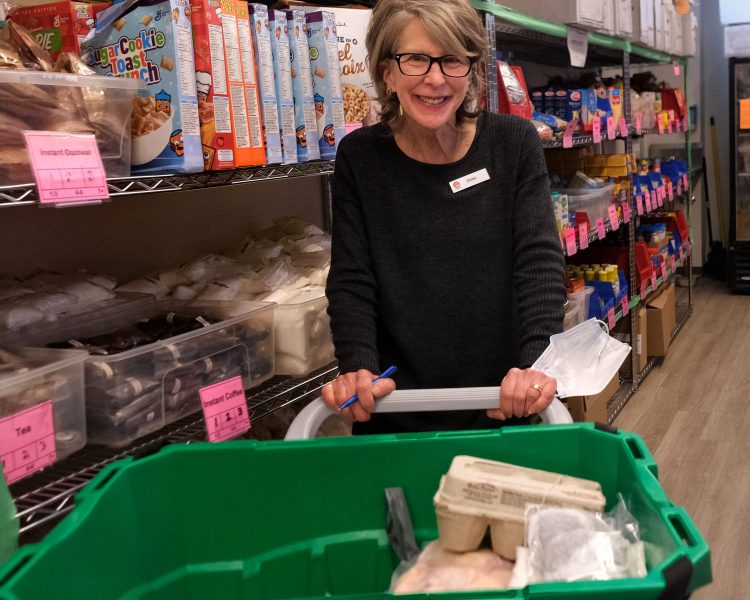
The Compass’ Inventory Manager is responsible for purchasing food and hygiene products needed throughout the warehouse, market and kitchen while ensuring available space and inventory are used effectively.
That is what donor flexibility looks like in practice.
This is one of the least understood facts about food banking.
When you donate money instead of a can of soup, that dollar usually buys more food than you’d get buying the same item at retail price. Food banks across Canada regularly purchase in bulk, source through manufacturer and grocer partnerships, and access wholesale pricing that individual shoppers can’t.
That doesn’t mean food drives aren’t valuable, they absolutely are, especially for specific high-need items, but if your goal is maximum impact per dollar, a monetary gift usually stretches furthest.
For many donors, the strongest approach is simply to give in the way that works best for them.
We keep our appeals grounded in real numbers, not vague promises. Here’s roughly what different donation amounts provide:
Donation | What it typically provides |
$25 | An emergency grocery hamper to help a household bridge a difficult week |
$50 | A week of groceries for a family of four, or several hot meals served through The Compass Kitchen |
$100 | Stocking our Market shelves for multiple households, including staples, fresh produce, and protein |
Monthly gift (any amount) | Predictable funding that lets us plan food purchasing in advance, rather than reacting week to week |
The Compass is not only a grocery-distribution site.
It is a Food Bank & Outreach Centre.
That distinction matters.
Financial support also contributes to programs and services that address challenges frequently connected to food insecurity.
We currently work with programs and community partners addressing areas such as:
In 2025, its partner agencies also supported 1,380 Compass clients.
This is why a donor is not simply helping put cans on shelves.
Food is often the immediate need.
The wider goal is stability.
Food assistance does not always mean groceries to take home.
The Compass also prepares and serves meals.
In 2025, the organization reported serving 84,381 meals.
Prepared meals are particularly important for people who may:
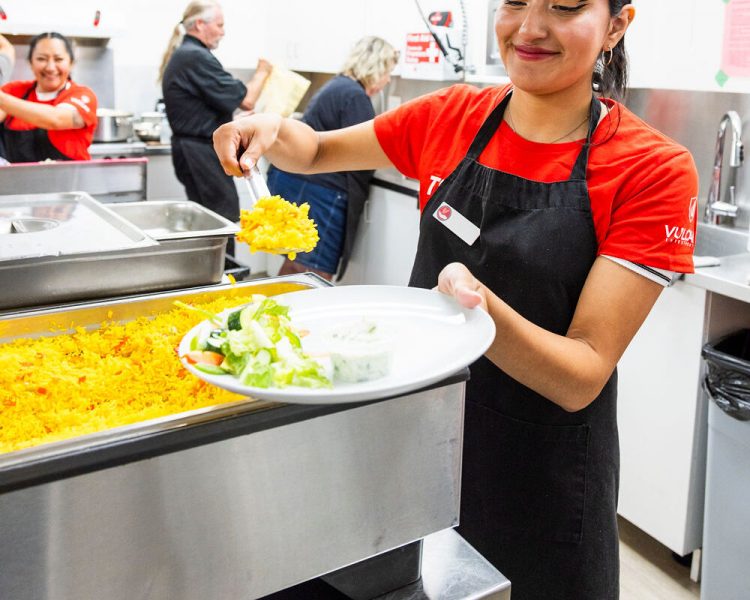
A kitchen also requires resources beyond donated ingredients.
Food must be safely stored, prepared and served.
Equipment has to work.
Facilities must be maintained.
Volunteers need coordination.
Financial support helps make that entire process possible.
A food bank could not safely function if literally every dollar were spent only on groceries.
Imagine having thousands of pounds of food but no:
Operations are part of delivering the service.
Every week, The Compass supports over 2,200 individuals in south Mississauga, roughly a third of whom are children. That number has grown substantially over the past several years as the cost of groceries and housing has climbed faster than incomes, which is exactly why predictable, ongoing donations matter as much as one-time gifts.
We know “trust us” isn’t good enough. That’s why:
Financial donations give us the flexibility to respond to what our neighbours need right now. Some weeks that may mean purchasing fresh food or protein. Other times it means filling an unexpected inventory gap or helping sustain another essential program.
~ The Compass
Giving to The Compass feels meaningful because it helps neighbours in our own community.
~ Donor
A food-bank donation does not disappear into an abstract fund.
It becomes part of a system that helped us distribute nearly one million pounds of food and serve more than 84,000 meals in 2025.
Some donations help purchase food.
Some help meals reach the table.
Some help keep programs operating.
And some provide the infrastructure needed to make sure food reaches neighbours safely and respectfully.
That is the real answer to “Where does my donation go?”
It helps The Compass turn community generosity into food, dignity and practical support for neighbours in south Mississauga.
Help The Compass respond where the need is greatest. Donate Funds Today
Want to provide reliable support throughout the year? Join the Nourishing Circle
Can I choose exactly where my donation to The Compass is used?
Some campaigns may be connected to particular programs or needs. For general donations, allowing The Compass flexibility can help the organization direct funds toward current priorities. Contact The Compass before making a large restricted gift if you want your donation used for a specific purpose.
Does The Compass publish audited financial statements?
Yes. The Compass publishes annual reports and audited financial statements, allowing donors to review financial information and community impact.
Is The Compass independently rated as a charity?
Yes. Charity Intelligence currently gives The Compass a 5-star rating, an A for financial transparency and High ratings for results reporting and demonstrated impact.
Does The Compass receive donated food as well as purchase food?
Yes. Its food supply includes donated products as well as food purchased to fill inventory gaps and provide nutritious options.
Why would a food bank need to purchase food if the community donates groceries?
Donated inventory does not always match current needs. Monetary donations help The Compass purchase products that are low, including fresh produce, dairy, protein and hygiene items.
Can my workplace help increase the impact of my donation?
Possibly. Some employers offer charitable matching, payroll giving or volunteer grants. The Compass recommends checking with your Human Resources team to see whether your gift can be matched.
Where can I see The Compass’ annual results?
The Compass publishes current impact information, annual reports and financial statements on its Our Impact and financial-reporting pages.